What is a Steering Gearbox and How Does it Function?
The steering gearbox plays a crucial role in vehicle performance. It transforms the driver's input into effective turning of the wheels. According to a recent industry report by Insight Partners, the global steering gearbox market is expected to reach $9 billion by 2027, growing significantly due to increasing automotive demand.
Expert Mark Turner, a leading figure in automotive engineering, emphasizes, "A reliable steering gearbox is essential for precision and safety in modern vehicles." The complexity of this component often leads to oversight in maintenance. Many drivers may not consider regular checks for their steering gearbox's efficiency. When overlooked, small issues can escalate into serious safety concerns, highlighting the importance of proactive care.
In a world focused on technological advancements, the steering gearbox should not be dismissed. Continuous improvements are necessary as vehicles evolve with more sophisticated systems. The balance between innovation and reliability remains a challenge. As we enhance automation, the steering gearbox's role will need reassessment to ensure optimal vehicle performance.
What is a Steering Gearbox: Definition and Purpose
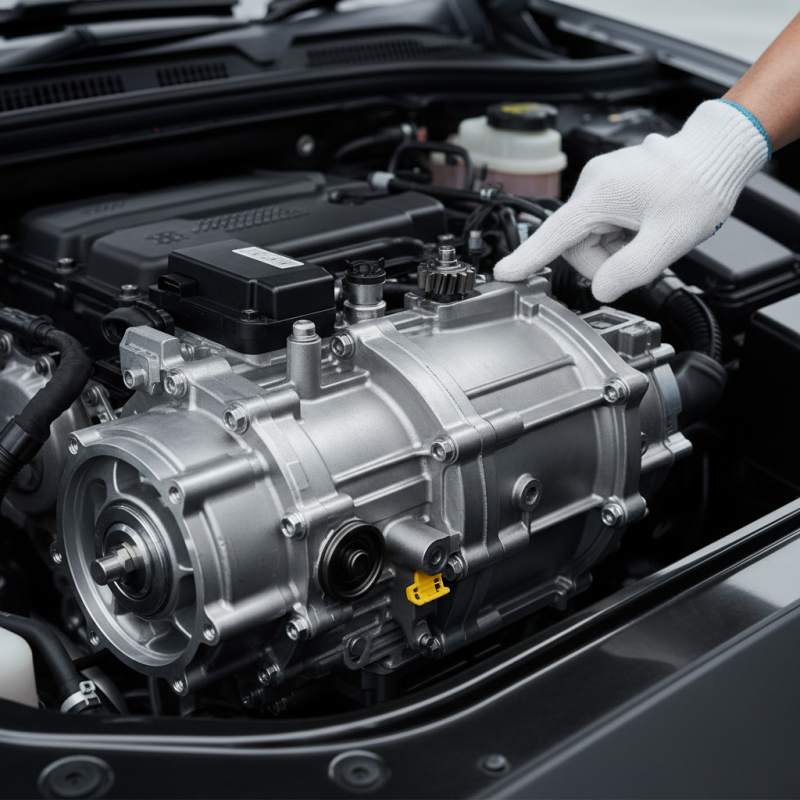
A steering gearbox is a crucial component in vehicles. Its primary role is to translate the driver's steering input into actual wheel movement. This device ensures that turning the steering wheel results in a smooth and controlled change in direction.
The steering gearbox operates by converting rotational motion into linear motion. When you turn the wheel, the gearbox gears activate, moving the connecting rod or rack. This mechanism allows for precise control of the vehicle’s direction. However, wear and tear can occur over time. If the gearbox is not maintained, it might lead to inconsistent steering response.
Drivers may sometimes notice a lack of responsiveness. This may occur due to inadequate lubrication or internal damage. Regular checks can help identify these issues early. Addressing them can prevent further complications and enhance driving safety. Ensuring the steering gearbox is in good condition is vital for vehicle performance.
How the Steering Gearbox Works: Basic Mechanics
The steering gearbox is a crucial component in vehicles, translating the driver's input into wheel movement. It connects the steering wheel to the wheels, allowing for maneuverability. When you turn the wheel, the gearbox takes that motion and amplifies it. This makes it easier to navigate turns and curves.
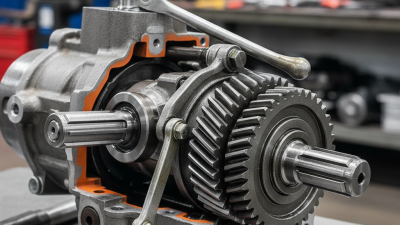
Inside the steering gearbox, several mechanisms work together. These often include gears, levers, and linkages that transform the circular motion of the steering wheel into linear movements of the wheels. You may notice that some gears are larger than others. This size difference allows precise control over the amount of force needed to steer. The mechanics can be complex and might require a closer look at how these components interact.
Sometimes, steering gearboxes can exhibit issues. For instance, they might become loose or worn over time, leading to a less responsive feel when steering. Check for any unusual noises when turning the wheel; it can indicate a problem. Regular maintenance is essential. A minor issue can escalate into a significant safety concern if ignored. Reflecting on these mechanics can help enhance your understanding of car handling and safety.
What is a Steering Gearbox and How Does it Function?
| Component |
Function |
Type |
Common Issues |
| Rack and Pinion |
Converts rotational motion into linear motion for steering. |
Mechanical |
Wear and tear of components. |
| Recirculating Ball |
Provides steering mechanism with minimal friction. |
Mechanical |
Loose or damaged ball bearings. |
| Electric Power Steering |
Uses electric motor to assist in steering, improving efficiency. |
Electrical |
Electrical failures or motor issues. |
| Hydraulic Power Steering |
Utilizes hydraulic fluid to amplify steering effort. |
Hydraulic |
Fluid leaks or pump failure. |
Types of Steering Gearboxes and Their Applications
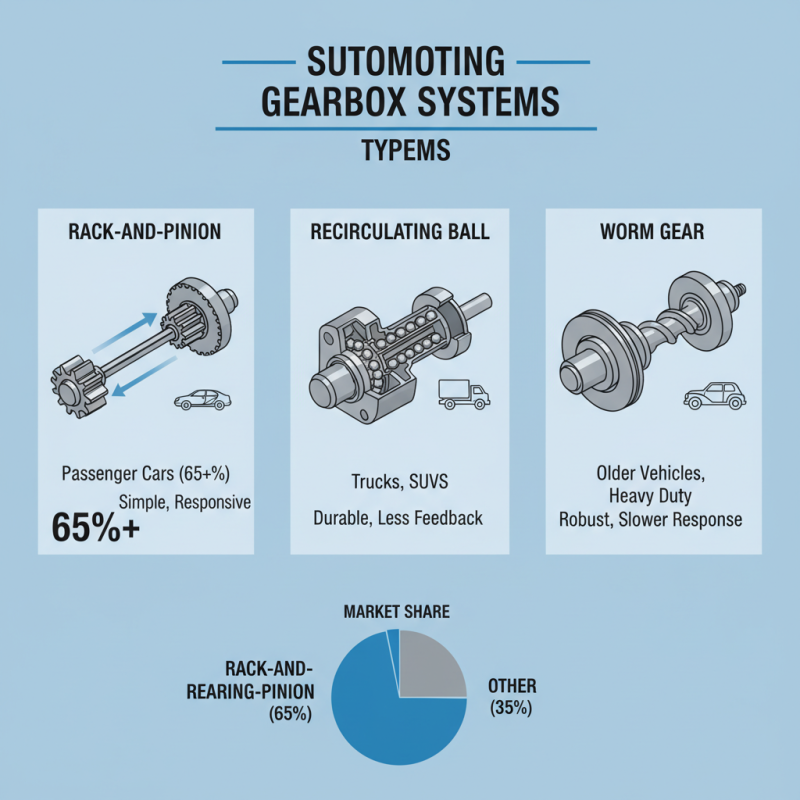
Steering gearboxes play a crucial role in vehicle control systems. They come in various types, each with specific applications. The primary types include rack-and-pinion, recirculating ball, and worm gear systems. According to industry reports, the rack-and-pinion type dominates the market, accounting for over 65% of applications in passenger cars due to its simplicity and responsiveness.
Rack-and-pinion systems convert the rotational motion of the steering wheel into linear motion, effectively turning the wheels. They are preferred for their lightweight design and efficiency. On the other hand, recirculating ball gearboxes are common in trucks and SUVs. They offer greater strength and durability, which is essential for heavy-duty applications. Despite their advantages, they are bulkier and may not provide the same level of feedback as rack-and-pinion systems.
The choice of steering gearbox impacts vehicle performance significantly. A report indicated that a vehicle's response time is critical; even a slight delay can affect safety. A well-designed system ensures precision in handling. However, some systems can become outdated as technology advances. It's important to regularly assess whether the selected type meets the evolving demands of modern driving conditions.
Common Issues and Maintenance Tips for Steering Gearboxes
Maintaining a steering gearbox is crucial for vehicle safety and performance. Common issues include leaks, unusual noises, and steering difficulty. According to a recent industry report, nearly 30% of steering problems are linked to gearbox failures. These failures can be caused by wear and tear, improper installation, or lack of maintenance.
Regular inspections and fluid checks can prevent serious issues. A well-maintained gearbox can last upwards of 150,000 miles. However, neglect can lead to costly repairs. Many vehicle owners overlook the importance of timely service. They may not realize that a small leak can turn into a significant problem.
It's essential to understand the signs of wear. Grinding noises or difficulty turning the wheel are red flags. Addressing these issues early can enhance vehicle longevity. Regular flushing of the steering fluid can also help. By ensuring the right fluid levels, you can avoid pump damage. Many drivers underestimate the impact of neglecting these simple maintenance tasks.
Common Issues in Steering Gearboxes and Their Frequency